

Five Book Reviews
Five books I read in 2025 that deserve recognition!

Note: Though I could linger on all the things that make these books remarkable, I feel most called to share the ways they’ve met me. For context, I am a twenty-five year old woman, an apprentice of Jesus Christ, who hasn’t finished college but deeply cares about my community, issues of justice, and emotionally healthy churches.
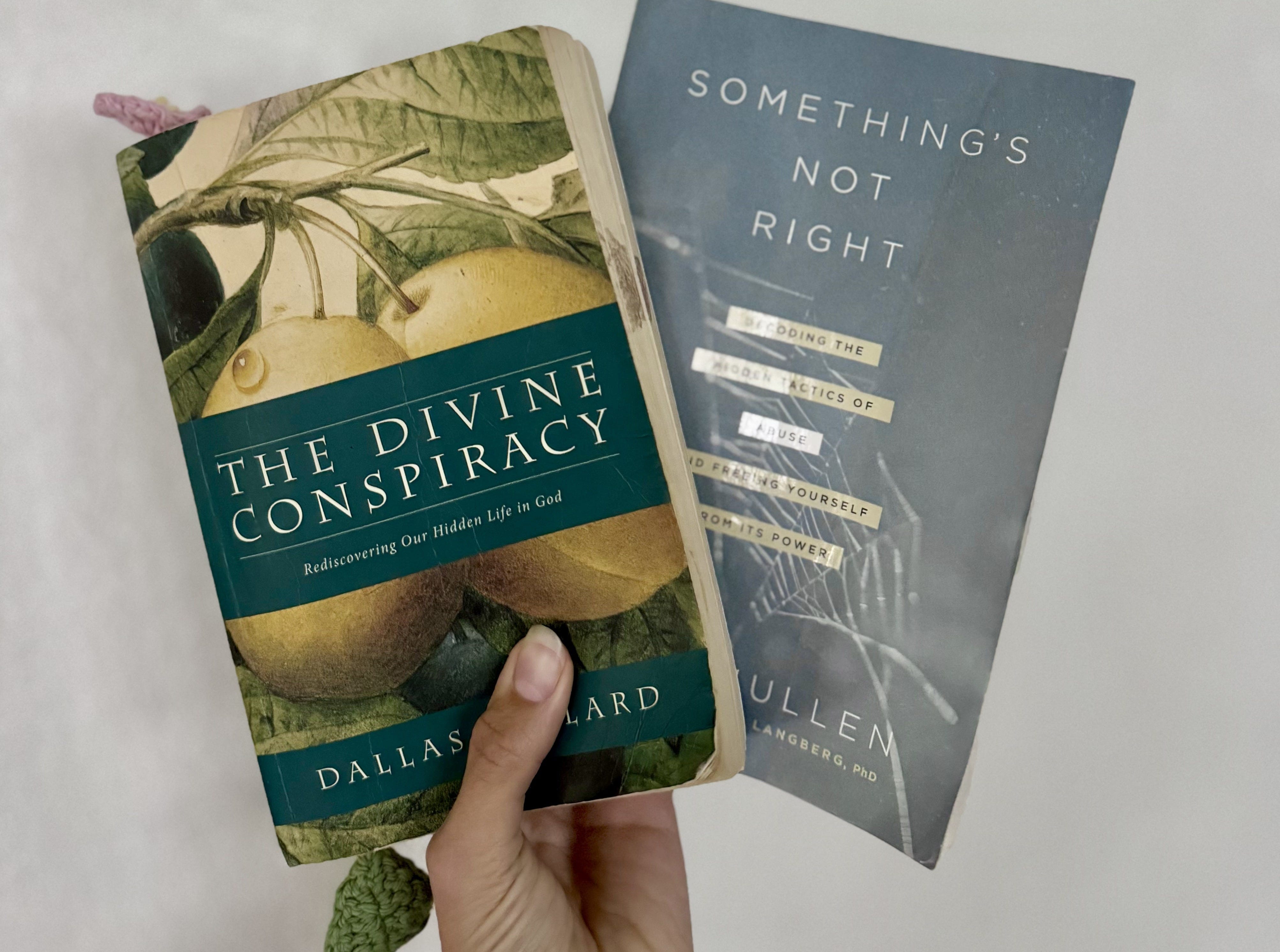
The Divine Conspiracy by Dallas Willard- Philosophy and Christian Discipleship
Wow, where do I even begin?!! A pastor dropped this book recommendation on Substack notes, so naturally I hopped onto Amazon and bought it. Only when it arrived did I discover I’d accidentally ordered the study guide… OOPS… So after fixing that mistake and waiting another two weeks, I finally got to crack open what is now, truly, one of the greatest books of all time.
Dallas Willard’s application of scripture, especially the Sermon on the Mount, is expansive and deeply grounded. He urges readers to engage the teachings of Jesus not as set of rules but as an invitation into participatory transformation that reshapes one’s interior life (character). Throughout the book, he expounds on passages in their historical and literary contexts while expanding them into modern-day examples, addressing how scripture reveals the formation of one’s desires, habits, and social patterns. Ultimately, his writings, which are intellectually rigorous and spiritually stimulating, invite readers into apprenticeship of Jesus.
What I love most about this book is Willard’s candor. At various points of the book, he mentions the ways in which his own views of Scripture has changed due to real-life situations that challenged his original views. Furthermore, as a Gen Z Christian who has been working through the effects of spiritual abuse, I’m especially drawn to this book because his writing has helped me realize that the fruit of someone’s character doesn’t always match their outward display of spiritual gifts. It’s pushed me to evaluate character on a much deeper level than I used to. Lastly, his writings have effectively caused me to reflect on my own motives, and challenge myself to grow in areas where I see lack.
Please take a moment to appreciate this quote from Dallas Willard:
“…(Character is the) connection between the inner dimensions of personality and the outward revelations of it in action… Actions do not emerge from nothing. They faithfully reveal what is in the heart, and we can know what is in the heart that they depend upon.”
Something’s Not Right by Wade Mullen- Psychology Spiritual Abuse
If you are a survivor of spiritual abuse this book may be disorientating to engage with OR it may bring great clarity. This book is a clear, compassionate, and deeply illuminating guide to recognizing the dynamics of abuse and manipulation in spiritual institutions and relationships. Drawing from research, personal experience, and various testimonies, Mullen equips readers with the tools to identify the subtle tactics abusers use to confuse, silence, and control. Mullen provides readers with validation, language, and tools help readers leave a harmful system and begin the slow, courageous work of healing.
Mullen writes in both an analytical and pastoral tone. He includes valid research, charts, and helpful summaries at the end of every chapter. Rather than using biblical texts to prescribe quick fixes, enforce forgiveness, minimize harm, or rush reconciliation, Mullen turns to scripture to illuminate truth, expose deception, and affirm human dignity. His research focuses on the patterns of character, power, and control- which are all themes present in the Biblical narrative- and uses scripture to support clarity, justice, and healing.
What I love most about this book is that Mullen invites readers (especially survivors) into the practice of truth-telling, which in doing so, liberates a survivor from the grips of an abuser’s control, and invites the greater community to move from image protection to genuine integrity. Lastly, His personal examples of spiritual abuse and manipulation are nearly identical to my own experiences. This book has aided me in my journey to lament my church hurt, heal, and move forward in hope.
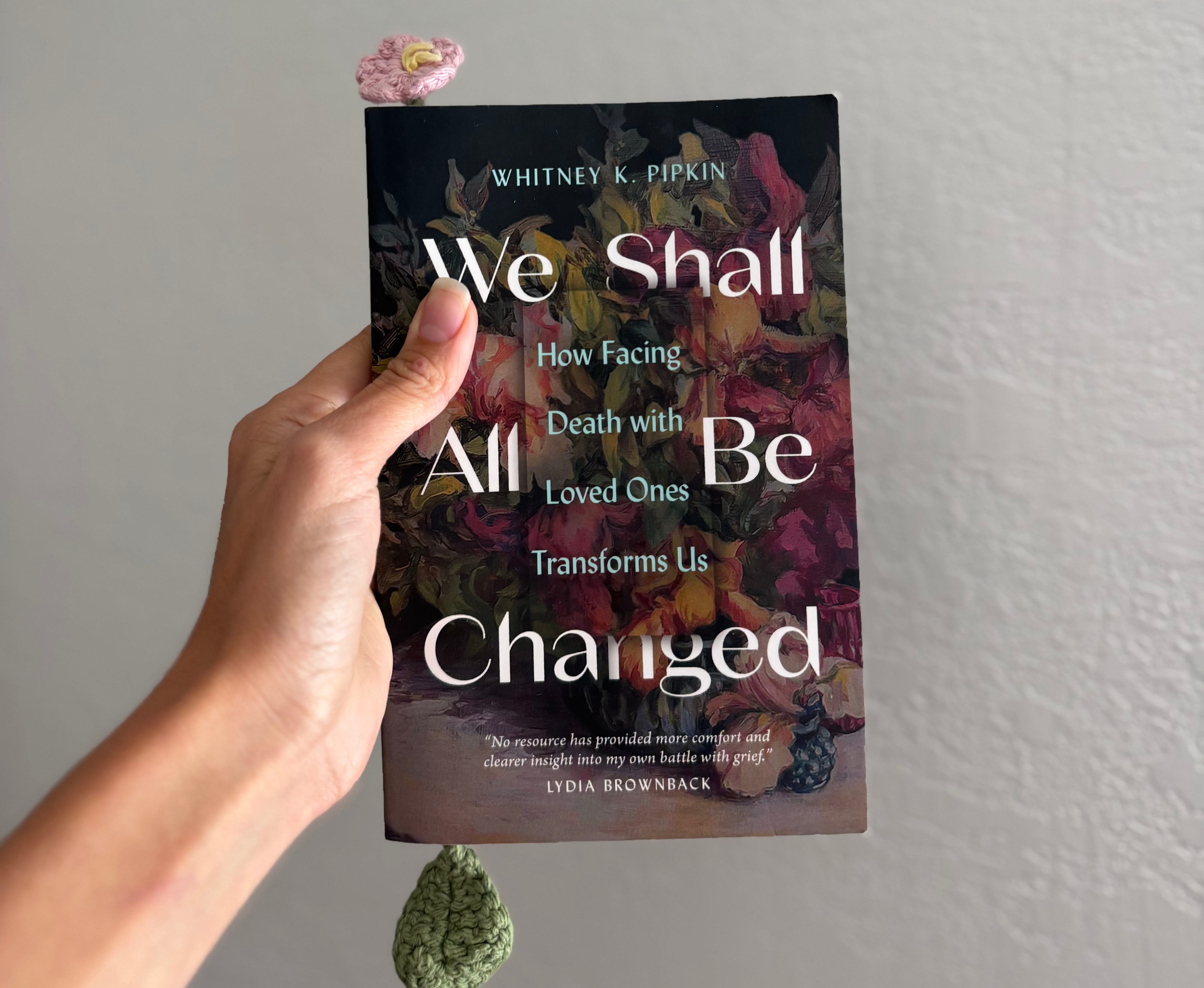
We Shall All Be Changed: How Facing Death With Loved Ones Transforms Us by Whitney Pipkin- Grief, loss, and Christian Eschatology
We Shall All Be Changed is a tender memoir exploring what it means to accompany someone through dying, and how that journey has the capacity to reshape caregivers. Drawing from her own experience of caring for her mother (who was diagnosed with cancer), Pipkin writes from a place of vulnerable honesty. She explores how the anticipatory grief of sitting close to morality is similar to enduring the labor pains of birth. Her book illuminates how grief is more than emotion; it is an invitation to love more deeply, let go of control, and appreciate the present. She neither romanticizes death nor does she urge readers to move past their pain, but invites readers into a gentle and courageous way of walking alongside the dying.
However, what this book fails to explore— and I don’t blame Pipkin for it— is the reality that not every bereaving caregiver has an emotionally healthy relationship with the one they are caring for. Her writing offers no space or support for the complicated reality of caregivers who have been profoundly wounded by trauma or have broken trust with those they care for. While I fully acknowledge that her memoir was not meant to be an extensive guide, I believe it’s worthwhile to note what the book lacks.
Nonetheless, what I loved most about this book was Pipkin’s vulnerability in recounting her personal hardships in her caregiving journey with her mother. Her honesty allowed me to process the heartaches I faced while caregiving for my mother- ultimately, allowing me to feel seen, understood, and related to. If I could summarize her book in a sentence it would be: A book that succeeds at reminding the bereaving that Jesus can handle every human emotion.
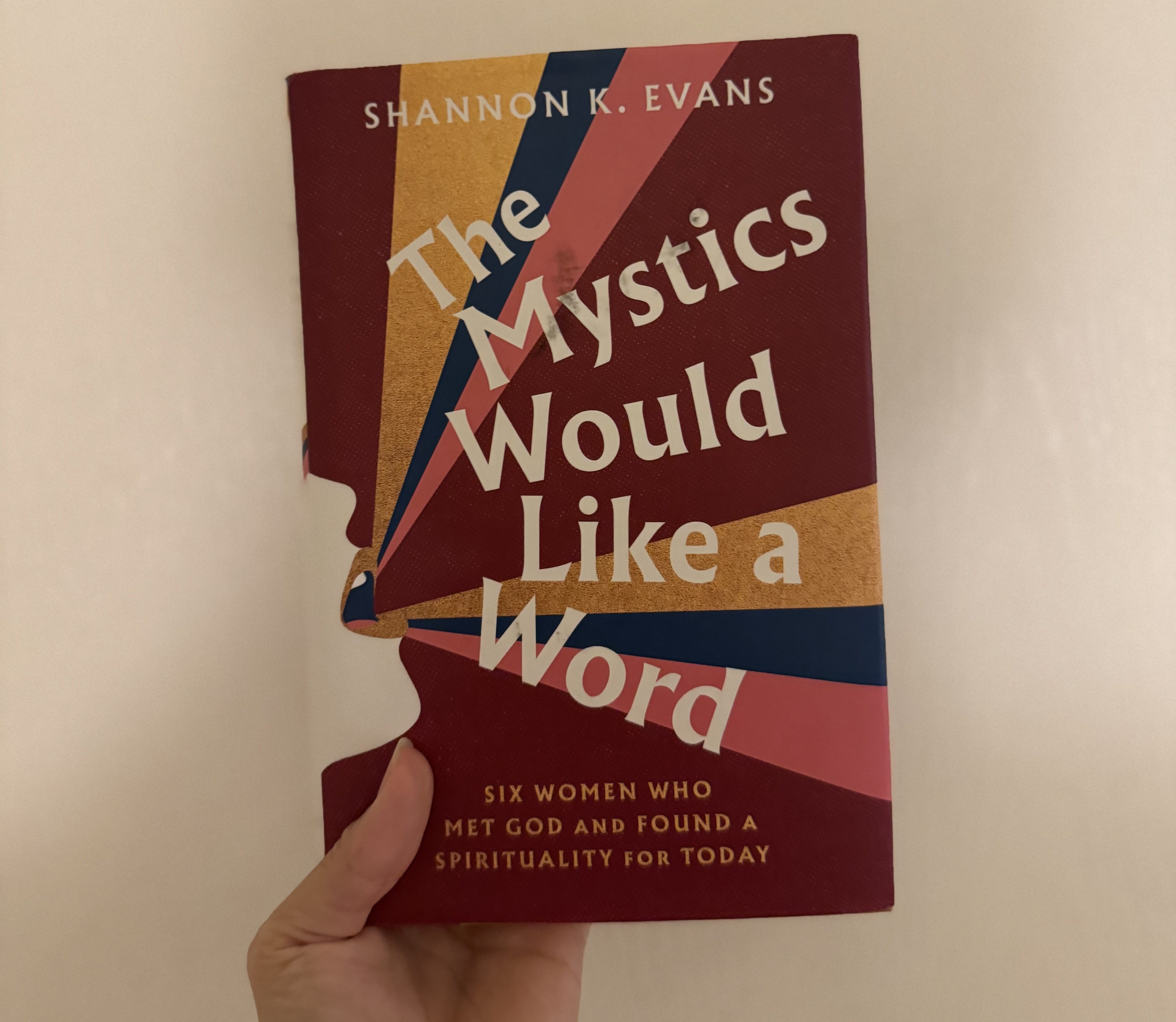
The Mystics Would Like a Word: Six Women Who Met God and Found Spirituality for Today by Shannon K. Evans- Women’s Christianity and Mysticism
Okay… I get it, “mysticism” is a trigger word for most Christians… However, in this book, Evans doesn’t use the word to describe secretive practices that are reserved for spiritual elites. Rather, she uses the word to describe women of faith, whose inner life in Christ can inspire readers to reconnect with presence, embodiment, and intimacy with God.
The Mystics Would Like a Word is a disarmingly-honest book that explores the spirituality of six historic women (five nuns and one laywoman) and the unique particularities of their journey to God. Evans writes with clarity and a bit of humor, weaving biography, theology, and her own personal reflections. Each chapter highlights how these historic women cultivated an inner life marked by attentiveness, courage, embodiment, and a radical openness to God’s presence. Evans does not shy away from exploring the messiness of their lives; rather, she showcases how their doubts, suffering, and limitations became the very soil for their transformation.
However, I will note that I was not the biggest fan of Evans’s tone; at various points in the book, her writing comes across as critical or even somewhat bitter about the current state of the church’s view on women, which at times distracts from the otherwise reflective and expansive depth of the work.
Nonetheless, what I loved most about this book is that a woman is writing about women! I’ve read many books on women of faith, all which were written by men; and though I am grateful for men who have written about women, it translates differently when women write about women. After-all, women understand women better than men do… Beyond that, her book feels anchored in faith tradition, while leaving room for contemporary reflection. This book reminded me that my relationship with God is unique, special, and treasured- I can trust the way the Spirit speaks to me.
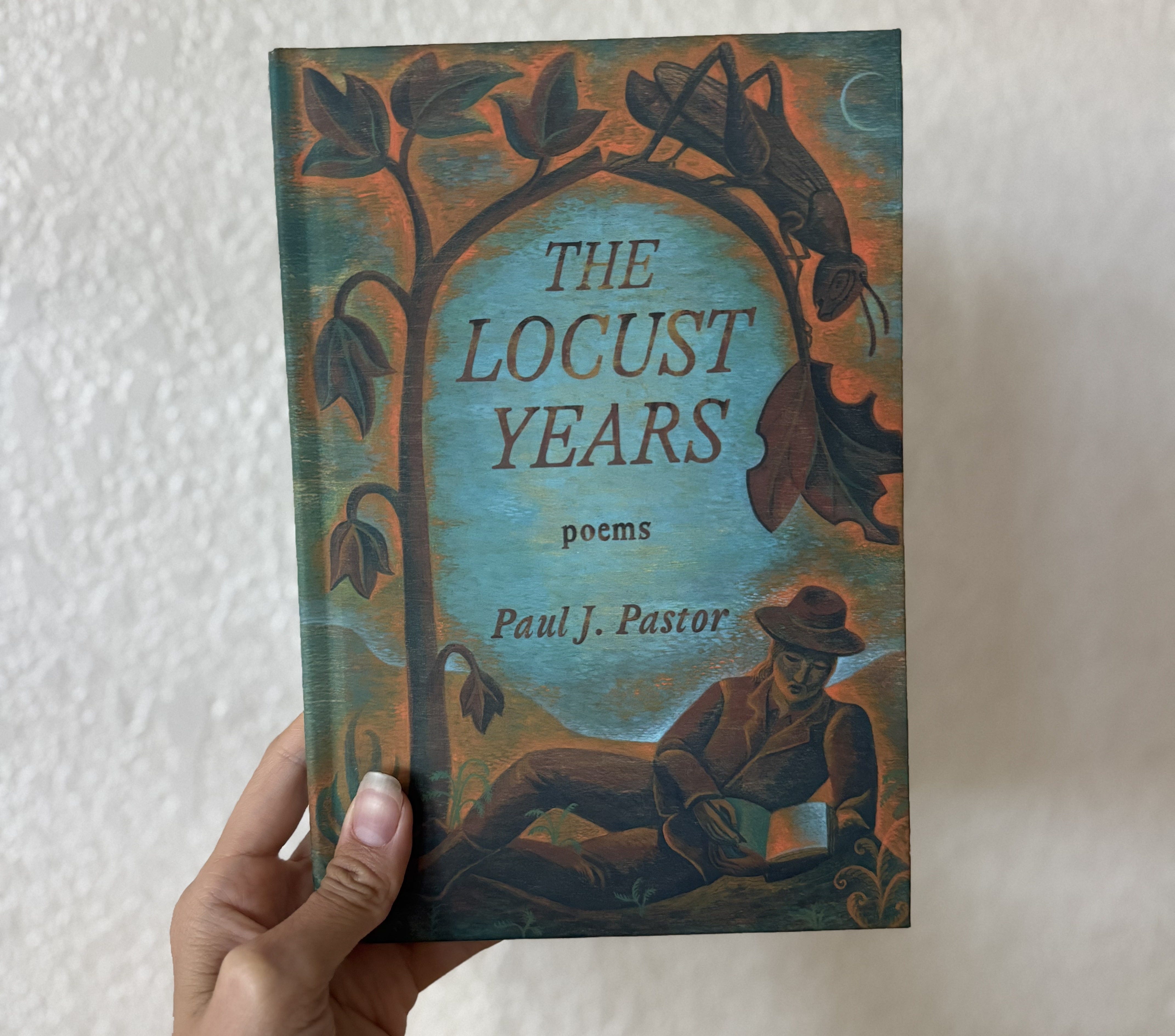
Oh, hey… Surprise, surprise… Paul J. Pastor made it on another one of my book reviews. LOL.
The Locust Years is a luminous and haunting collection of poems that explore the different seasons of life. His poems cover deep sorrow, while shining light on the beauty of resilience. His use of language is lyrical, tactile, and blends the natural world with spiritual longing in a way that feels deeply intimate.
What I loved about this collection of poetry is that I’ve found it to be a companion in my wilderness season. Throughout the year, I’ve turned to Wringing the Changes, one of the poems in the book, as a source of comfort. The imagery used in that poem, crosses my mind often. Speaking of imagery, the art that Pastor includes in his collection is beautiful.
Ultimately, the collection has invited me to take note of the difference between resurrection and restoration. I’ve found, that in my desire to escape suffering, I beg the Lord for resurrection- a quick turnaround to the perennial grief I’ve encountered- instead of trusting the slowness restoration. God doesn’t resurrect the years the locust have eaten, instead He gently promises to restore the years in which they have eaten.
I am clinging to this promise. For oh, how the locusts have eaten.